MWC

Core & Abs Burner

A focused 30-minute core workout that targets the rectus abdominis, obliques, and deep stabilizers for a strong, defined midsection.

30 minbeginnerstrengthcorebodyweightcabledumbbell
3412423

Exercises (6)

1

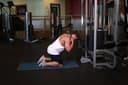
Cable Crunch

Kneel in front of cable. Curl ribcage toward pelvis, not hips toward floor.

Alt: Weighted Crunch, Ab Machine Crunch

3 x 12-15

Rest 60 sec

Tempo 2-1-2-0

2

Hanging Leg Raise

Straight legs if possible. Tilt pelvis at the top. No swinging.

Alt: Hanging Knee Raise, Captain Chair Leg Raise

3 x 10-12

Rest 60 sec

Tempo 2-1-2-0

3

Pallof Press

Set cable at chest height. Press arms straight out, resist the rotation.

Alt: Banded Pallof Press, Landmine Rotation

3 x 10 per side

Rest 60 sec

Tempo 2-2-2-0

4

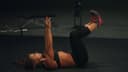
Dead Bug

Keep lower back pressed into floor. Move slowly and with control.

Alt: Bird Dog, Hollow Body Hold

3 x 10 per side

Rest 45 sec

5

Side Plank

Body in a straight line. Stack feet or stagger them for balance.

Alt: Copenhagen Plank, Side Plank with Hip Dip

3 x 30-45 sec per side

Rest 45 sec

6

Weighted Plank

Place plate on upper back. Squeeze glutes and abs. Breathe steadily.

Alt: Standard Plank, Ab Wheel Rollout

3 x 30-45 sec

Rest 60 sec

Advertisement

About This Workout

The Core and Abs Burner is a dedicated 30-minute session designed to strengthen every layer of your midsection, from the superficial rectus abdominis that creates the six-pack appearance to the deep transverse abdominis and obliques that provide spinal stability and rotational power. While many lifters treat core training as an afterthought tacked onto the end of another workout, dedicating a full session to the midsection allows you to train it with the focus and intensity it deserves.

A strong core is not just about aesthetics. It is the foundation of all athletic movement and the critical link between your upper and lower body during compound lifts like squats, deadlifts, and overhead presses. Weakness in the core is often the hidden limiting factor that prevents lifters from progressing on their main lifts. If your squat stalls not because your legs are weak but because your torso folds forward under load, your core is the bottleneck. This workout addresses that bottleneck directly.

The session begins with cable crunches, one of the most effective exercises for the rectus abdominis because the cable provides constant tension throughout the range of motion, unlike bodyweight crunches where gravity offers resistance only through part of the movement. The ability to progressively load cable crunches also makes them superior for long-term strength development. Focus on curling your ribcage toward your pelvis rather than simply bending at the hips.

Hanging leg raises follow as a lower abdominal emphasis exercise. The lower portion of the rectus abdominis is recruited most effectively when the pelvis is tilted posteriorly, which is exactly what happens when you lift your legs while hanging. If full hanging leg raises are too challenging, start with hanging knee raises and progress to straight legs over time. Avoid swinging or using momentum. Each rep should be controlled and deliberate.

The Pallof press is an anti-rotation exercise that trains the obliques and deep core stabilizers in a functional way. You hold a cable at chest height and press it straight out in front of you while resisting the rotational pull. This exercise builds the kind of core stability that protects your spine during real-world movements and heavy lifts. It is far more effective for functional strength than traditional crunches or sit-ups.

Dead bugs are included as a motor control exercise that teaches you to maintain a stable lumbar spine while moving your limbs. This pattern directly transfers to bracing during squats and deadlifts. Extend opposite arm and leg slowly while keeping your lower back pressed into the floor. If your lower back arches off the ground, you have gone too far.

Side planks target the obliques and the quadratus lumborum, a deep muscle on either side of the lumbar spine that is critical for lateral stability. Hold each side for the prescribed duration, keeping your body in a straight line from head to feet. If the standard side plank is too easy, elevate your feet on a bench or add a hip dip to increase the difficulty.

The workout finishes with a weighted plank to build endurance in the entire core musculature. Place a weight plate on your upper back and hold a strict plank position. The added load turns a standard plank from an endurance exercise into a true strength builder. Keep your glutes squeezed, your abs braced, and breathe steadily throughout.

This workout can be performed two to three times per week as a standalone session or added to the end of an upper body day when time permits. Core muscles recover faster than large muscle groups like legs or back, so they can tolerate higher training frequency. Progress by adding weight to cable crunches and weighted planks, adding reps to hanging leg raises and dead bugs, and increasing hold times on side planks.

Visible abs are made in the kitchen as much as the gym. No amount of core training will reveal a six-pack if your body fat percentage is too high. Combine this workout with a caloric deficit and adequate protein intake if ab definition is your primary aesthetic goal.

Pro Tips

  • 01.Brace your core as if someone is about to punch your stomach. This activates the deep stabilizers, not just the surface muscles.
  • 02.Breathe out forcefully during the contraction phase of crunches and leg raises to maximize abdominal engagement.
  • 03.Progress core exercises the same way you progress any other muscle: add weight, add reps, or increase time under tension.
  • 04.Do not rush through core exercises. Slow, controlled reps are far more effective than fast, sloppy ones.
Advertisement

Frequently Asked Questions

Will this workout give me visible abs?
This workout will strengthen and develop your abdominal muscles, but visible abs require a sufficiently low body fat percentage, typically below 15 percent for men and below 22 percent for women. You can have incredibly strong abs that are hidden under a layer of body fat. Achieving visible abs requires a combination of core training to build the muscle and a caloric deficit to reduce body fat. Diet is the primary driver of ab visibility, while training builds the muscle underneath.
How often should I train abs?
The core muscles can be trained two to four times per week because they are composed of a high proportion of slow-twitch fibers that recover relatively quickly. Two to three dedicated sessions per week is optimal for most people. However, remember that your core is already working as a stabilizer during compound lifts like squats, deadlifts, and overhead presses, so the total volume of core training is higher than what you do in dedicated sessions alone. If your core is very sore between sessions, reduce frequency to twice per week.
Are crunches bad for my back?
Traditional floor crunches have been criticized by some researchers, most notably Stuart McGill, for the repetitive flexion they place on the lumbar spine. However, the risk depends on the individual, the volume, and the technique. If you have a healthy back and perform crunches with controlled form, they are generally safe. Cable crunches are a better option because the resistance profile keeps tension on the abs throughout the movement. If you have a history of lower back problems, substitute crunches with isometric exercises like planks and dead bugs.
Can I do this workout at home without cables?
Yes, with some substitutions. Replace cable crunches with weighted crunches holding a dumbbell or plate on your chest. Replace Pallof presses with banded Pallof presses using a resistance band anchored to a door frame or sturdy post. All other exercises in the workout are bodyweight based and require no equipment. A pull-up bar or door-frame bar is helpful for hanging leg raises but you can substitute captain chair raises or lying leg raises on the floor.
Should I train abs before or after my main workout?
If you are doing this as a standalone session, timing does not matter. If you are adding core work to the end of another workout, always do it after your main lifts. Training abs to fatigue before squatting or deadlifting would compromise your ability to brace your core under heavy loads, which increases injury risk and reduces performance on the compound lifts that matter most. The only exception is a light warm-up set of dead bugs or planks to activate the core before heavy lifting, which can actually improve performance.

Related Workouts