About This Workout
The Full Body Beginner Workout is the ideal starting point for anyone new to resistance training. Whether you have never touched a weight before or you are returning to the gym after a long break, this session teaches the fundamental movement patterns that form the foundation of all effective training programs while building a base of strength, coordination, and work capacity.
Full body workouts are the best approach for beginners for several important reasons. First, they allow you to practice each major movement pattern multiple times per week, which accelerates the motor learning process. A beginner who squats three times per week will develop proficient squat technique much faster than one who squats once per week. Second, full body sessions distribute volume across all muscle groups evenly, preventing the imbalances that can develop when beginners gravitate toward their favorite body parts. Third, each session stimulates muscle protein synthesis across the entire body, which means you are building muscle everywhere every time you train.
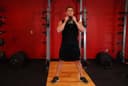
The workout begins with the goblet squat, a dumbbell variation that is far more beginner-friendly than the barbell back squat. Holding the dumbbell at chest height acts as a natural counterbalance that helps you maintain an upright torso, and the front-loaded position makes it nearly impossible to lean too far forward, which is a common beginner mistake on barbell squats. The goblet squat builds quad, glute, and core strength simultaneously.
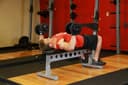
The dumbbell bench press follows as the primary upper body pressing movement. Using dumbbells rather than a barbell allows each arm to move independently, which promotes balanced development and teaches stabilization. The bench press targets the chest, front delts, and triceps. If your gym does not have a bench, you can perform floor presses instead.
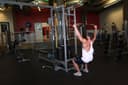
The machine lat pulldown introduces vertical pulling, training the lats, biceps, and rear delts. Machines are excellent for beginners because they guide the movement path and eliminate the need for complex stabilization, allowing you to focus on engaging the target muscles. As you progress, you can transition from lat pulldowns to assisted pull-ups and eventually full pull-ups.
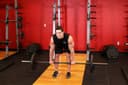
Dumbbell Romanian deadlifts teach the hip hinge, one of the most important movement patterns in all of strength training. The hip hinge is the foundation of deadlifts, rows, and many athletic movements. Using dumbbells reduces spinal loading compared to a barbell and allows you to focus on feeling the hamstring stretch and glute contraction without worrying about managing a heavy bar.
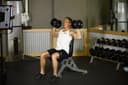
Dumbbell overhead press builds shoulder strength and stability. Pressing overhead with dumbbells requires each arm to stabilize independently and develops the deltoids, upper traps, and triceps. Start with a conservative weight and focus on a full range of motion, pressing from shoulder height to full lockout overhead.
The plank is included as a core stability exercise that teaches you to brace your midsection, a skill that transfers to every other exercise in the workout. Core stability is the foundation of safe and effective lifting. Hold each set for the prescribed duration, maintaining a rigid body line from head to heels.
This workout should be performed three times per week on non-consecutive days, such as Monday, Wednesday, and Friday. Start with weights that feel manageable for the prescribed rep range and add weight only when you can complete all reps with good form across all sets. Most beginners can add weight every session for the first several weeks, a phenomenon known as novice gains.
Be patient with the process. The first two to four weeks of any new program feel awkward as your nervous system learns the movement patterns. Strength gains will come quickly during this phase, often before any visible muscle growth. Consistent training, adequate protein intake of 1.6 grams per kilogram of body weight, and seven to nine hours of sleep per night will set you up for months of steady progress.
When you can comfortably complete this workout with significantly heavier weights than you started with and the volume feels easy, it is time to graduate to a more advanced program such as the PPL split or an upper/lower split.