Reverse Crunch
How to do the Reverse Crunch
- 1
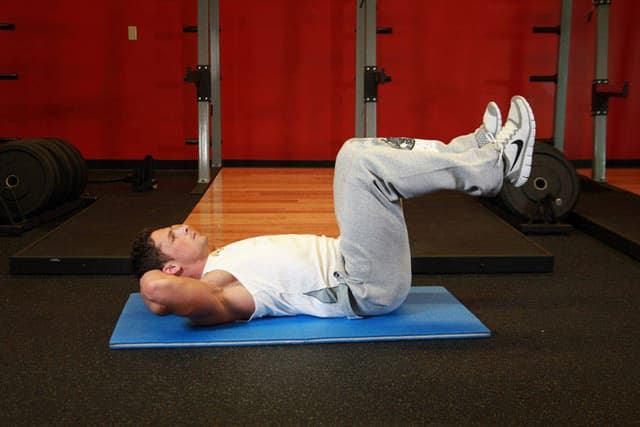
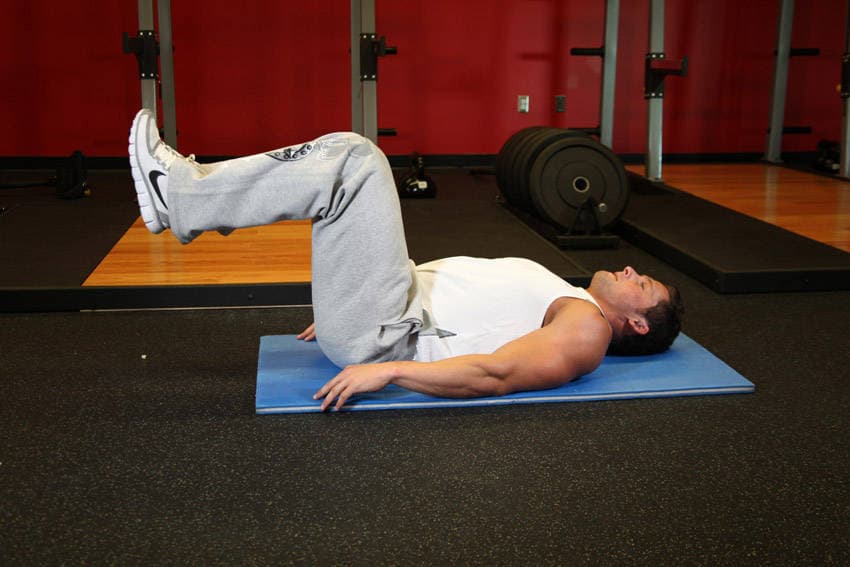
Lie down on the floor with your legs fully extended and arms to the side of your torso with the palms on the floor. Your arms should be stationary for the entire exercise.
- 2
Move your legs up so that your thighs are perpendicular to the floor and feet are together and parallel to the floor. This is the starting position.
- 3
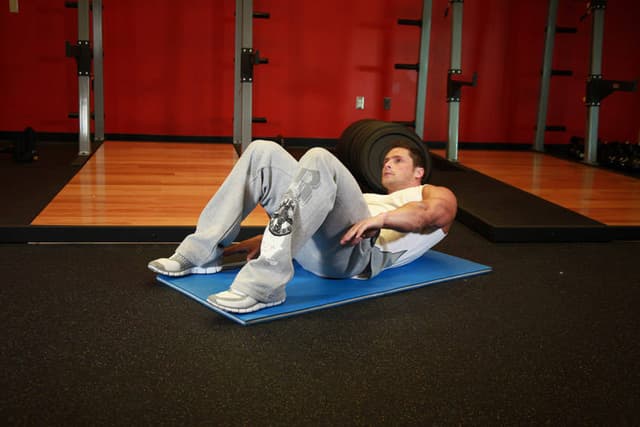
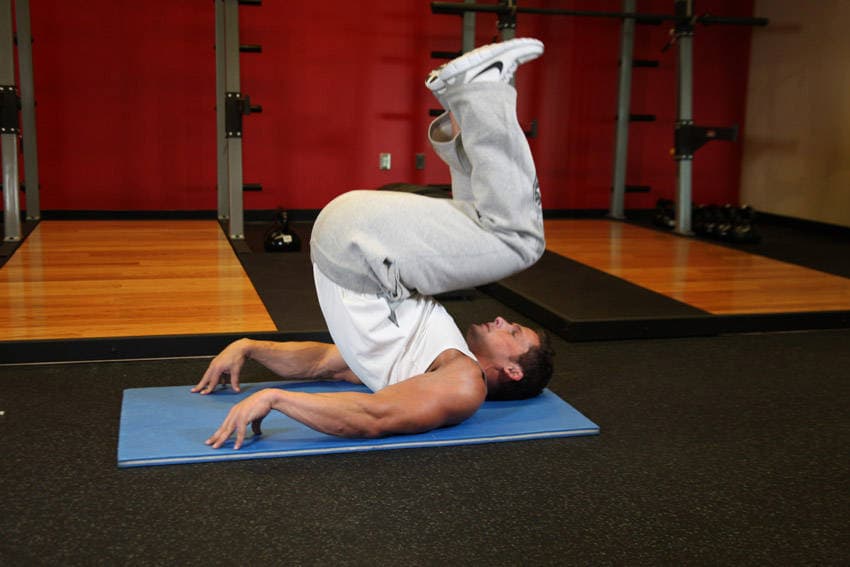
While inhaling, move your legs towards the torso as you roll your pelvis backwards and you raise your hips off the floor. At the end of this movement your knees will be touching your chest.
- 4
Hold the contraction for a second and move your legs back to the starting position while exhaling.
- 5
Repeat for the recommended amount of repetitions.
How to program the Reverse Crunch
Sets and reps
As an isolation movement, the Reverse Crunch is best trained with moderate loads and higher reps: 2–4 sets of 10–15 reps with 60–90 seconds of rest. Chasing heavy weight on isolation work usually degrades form before it builds muscle — prioritize a full range of motion and a controlled negative. Program it after your compound lifts.
Progression
The Reverse Crunch is beginner-friendly. Start with a load (or rep count) you can complete with clean form on every set, then add a small amount of weight or 1–2 reps each week. When you hit the top of your rep range on all sets, increase the load and drop back to the bottom of the range — simple double progression.
Put the Reverse Crunch into a plan
Generate a free, personalized workout plan that programs this and hundreds of other exercises around your goals.
Not sure how much to do? Check your weekly sets with the volume calculator.
Frequently asked questions
What muscles does the Reverse Crunch work?
The Reverse Crunch primarily targets the Abdominals.
What equipment do I need for the Reverse Crunch?
You need Body Only. Difficulty level: Beginner.
How many sets and reps of the Reverse Crunch should I do?
Do 2–4 sets of 10–15 reps with 60–90 seconds rest, focusing on a full range of motion and controlled tempo rather than maximum load.