Sled Reverse Flye
How to do the Sled Reverse Flye
- 1
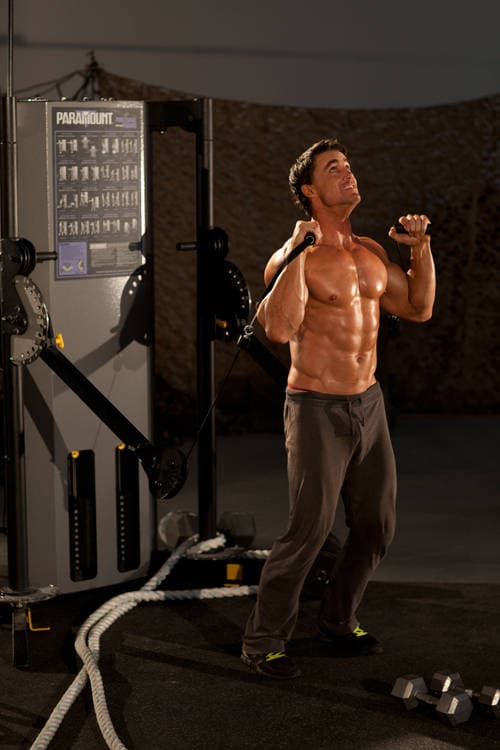
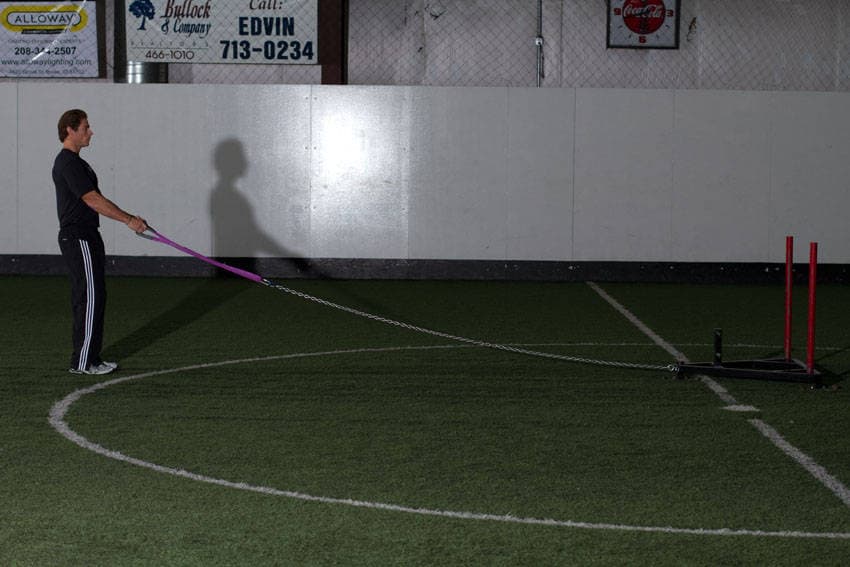
Attach dual handles to a sled connected by a rope or chain. Load the sled to a light weight.
- 2
Face the sled, backing up until there is some tension in the line. Take both handles at arms length at about waist level. Bend the knees slightly and keep your chest and head up. This will be your starting position.
- 3
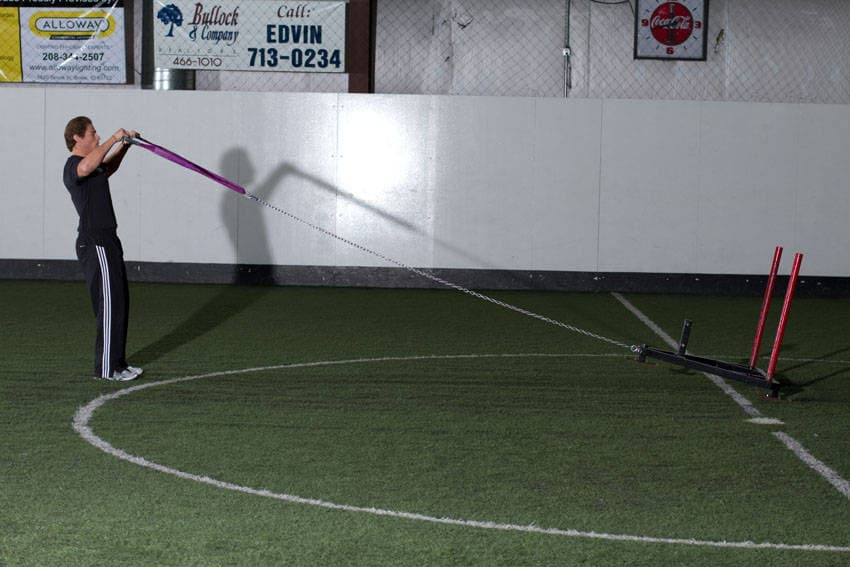
Without flexing the elbow, pull the handles upward and apart, performing a reverse fly with some external rotation. Your palms should be facing forward as you do this.
- 4
Return to the starting position, taking a couple steps back to take the slack out of the line.
How to program the Sled Reverse Flye
Sets and reps
As an isolation movement, the Sled Reverse Flye is best trained with moderate loads and higher reps: 2–4 sets of 10–15 reps with 60–90 seconds of rest. Chasing heavy weight on isolation work usually degrades form before it builds muscle — prioritize a full range of motion and a controlled negative. Program it after your compound lifts.
Progression
The Sled Reverse Flye is beginner-friendly. Start with a load (or rep count) you can complete with clean form on every set, then add a small amount of weight or 1–2 reps each week. When you hit the top of your rep range on all sets, increase the load and drop back to the bottom of the range — simple double progression.
Put the Sled Reverse Flye into a plan
Generate a free, personalized workout plan that programs this and hundreds of other exercises around your goals.
Not sure how much to do? Check your weekly sets with the volume calculator.
Frequently asked questions
What muscles does the Sled Reverse Flye work?
The Sled Reverse Flye primarily targets the Shoulders.
What equipment do I need for the Sled Reverse Flye?
You need Other. Difficulty level: Beginner.
How many sets and reps of the Sled Reverse Flye should I do?
Do 2–4 sets of 10–15 reps with 60–90 seconds rest, focusing on a full range of motion and controlled tempo rather than maximum load.