About This Workout
The Upper Body Strength workout is designed for lifters who want to build raw pressing and pulling power across all the major upper body muscle groups. Unlike hypertrophy-oriented sessions that emphasize volume and metabolic stress, this workout prioritizes mechanical tension through heavy loads and moderate rep ranges, targeting the neural and structural adaptations that drive maximal strength gains.
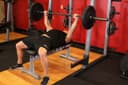
The session opens with the barbell bench press performed in a lower rep range with heavier loads than a typical bodybuilding workout. Bench pressing in the four-to-six rep range recruits high-threshold motor units that are not activated at lighter intensities, and it builds the kind of foundation strength that translates into better performance on higher-rep hypertrophy work down the line. Three-minute rest periods ensure you are fully recovered between sets so that each set is a true maximal effort.
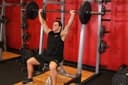
The barbell overhead press follows, standing this time to engage the entire body as a kinetic chain. Standing overhead pressing is not just a shoulder exercise. It demands core stability, glute activation, and leg drive, making it one of the most functional upper body exercises in existence. This is also a movement where most lifters stall relatively quickly, so patience and consistent effort are essential.
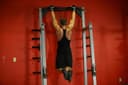
Weighted pull-ups serve as the primary vertical pulling movement. Adding weight to pull-ups develops impressive lat and upper back strength that carries over to deadlifts, rows, and general athleticism. If you cannot yet perform weighted pull-ups for the prescribed sets and reps, use a lat pulldown machine and progressively increase the load until bodyweight pull-ups become manageable.
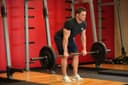
Barbell rows are included as the horizontal pulling counterpart. A strong row directly supports bench press performance by strengthening the antagonist muscles and improving your ability to maintain a tight upper back position on the bench. Row with a controlled tempo, pulling the bar to your lower chest and squeezing your shoulder blades together at the top.
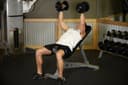
Dumbbell incline press provides additional pressing volume from a different angle. The incline targets the upper chest and anterior delts while the dumbbell format challenges stabilizer muscles that the barbell does not reach. This exercise bridges the gap between pure strength work and the kind of balanced muscle development that prevents injuries.
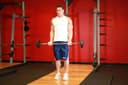
The workout closes with barbell curls and dips, two classic exercises that build arm strength. Dips are performed with added weight when possible and serve double duty as a chest and triceps builder. Barbell curls give the biceps a direct strength stimulus that pulls and rows alone cannot provide.
This workout is ideal for an upper/lower split where you train upper body twice per week on non-consecutive days. You can pair it with a lower body hypertrophy or lower body strength session depending on your goals. The total volume per session is intentionally moderate because strength training places higher demands on the nervous system than hypertrophy training, and recovery between sessions is paramount.
Progression on this workout should follow a simple linear model for as long as possible: add 2.5 kg to each barbell lift every one to two weeks. When you stall on a lift, hold the weight steady for two to three weeks and attempt to add one rep per set before increasing the load again. Keep a detailed log of every session to track these progressions over time.