

About This Workout
The Back Thickness Builder is a specialized session that prioritizes horizontal pulling movements and mid-back exercises to develop the dense, layered musculature that gives the back a thick, powerful appearance from the side. While many back workouts emphasize width through vertical pulls like pull-ups and pulldowns, this workout takes the opposite approach, focusing on rows and horizontal pulls that build the rhomboids, middle and lower traps, rear deltoids, and the deep spinal erectors that create three-dimensional back development.
Back thickness is what separates a physique that looks impressive from the front from one that commands attention from every angle. The muscles responsible for thickness are primarily the rhomboids, which sit between the shoulder blades, the middle and lower trapezius fibers, which run from the mid-spine to the scapulae, and the erector spinae, which create the ridges of muscle on either side of the spine. All of these muscles are best trained through rowing movements where you pull a load toward your torso.
The session opens with the T-bar row, one of the most effective exercises for loading the entire back with heavy weight. The T-bar row allows you to use a neutral grip, which is generally the strongest and most comfortable hand position for rowing. The fixed bar path means less energy is spent on stabilization, so you can focus on pulling as much weight as possible through a full range of motion. Drive your elbows behind your body and squeeze your shoulder blades together at the top of every rep.
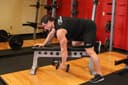
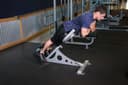
Chest-supported dumbbell rows follow, which eliminate any lower back involvement and force the mid-back muscles to do all the work. By lying face down on an incline bench, you remove the temptation to use momentum or body english, resulting in stricter form and better muscle engagement. The bilateral dumbbell format allows each side to work independently while the chest support lets you focus entirely on the contraction.
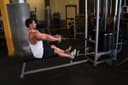
The seated cable row with a wide grip attachment is programmed to shift emphasis from the lats to the rhomboids and middle traps. A wide overhand grip changes the pulling angle so that the scapulae must retract more forcefully, which is the primary function of the rhomboids. Hold the peak contraction for a full second on every rep and allow the weight to pull your shoulder blades apart on the eccentric for a complete stretch.
Single-arm cable rows provide a unilateral training stimulus that addresses any side-to-side imbalances. The cable's constant tension profile and the freedom to rotate your torso slightly allow you to achieve a deeper contraction than most other rowing variations. Stand in a staggered stance for stability and pull the handle toward your hip while keeping your elbow close to your body.
Barbell shrugs target the upper trapezius, the large diamond-shaped muscle that creates the impressive neck-to-shoulder slope seen in powerful physiques. Heavy shrugs overload the traps with more weight than any other exercise. Use straps to ensure your grip is not the limiting factor, and hold each rep at the top for two seconds to maximize the contraction. Do not roll your shoulders. Shrug straight up and straight down.
The meadows row, named after the late bodybuilder John Meadows, is a unique landmine row variation that provides an exceptional stretch and contraction for the lats and teres major. The angled barbell path and the staggered stance allow you to reach further at the bottom of the rep, stretching the lat more than a standard dumbbell row. This exercise is a favorite among bodybuilders for its ability to create that thick, detailed look in the outer back.
The workout finishes with a back extension hold to strengthen the spinal erectors and build endurance in the muscles that support your posture during all other back exercises. Hold the extended position for the prescribed time, squeezing your glutes and lower back at the top. If bodyweight is too easy, hold a plate against your chest.
This workout pairs well with a separate session focused on back width through pull-ups and pulldowns. For a complete back development approach, alternate between this thickness-focused session and a width-focused session each week, or combine elements of both in a single back day if you only train back once per week.