About This Workout
The Shoulder Mass Builder is a dedicated session designed to develop all three heads of the deltoid muscle, the anterior, lateral, and posterior, along with the upper traps. Well-developed shoulders are one of the most visually impactful muscle groups because they create the wide, capped appearance that defines an athletic physique and enhance the V-taper by making the waist appear narrower in comparison.
Many lifters underestimate the complexity of shoulder training. The deltoid is a three-headed muscle, and each head has a different primary function and optimal training angle. The anterior deltoid is responsible for shoulder flexion and is heavily involved in all pressing movements. The lateral deltoid performs shoulder abduction, raising the arm out to the side, and is the primary contributor to shoulder width. The posterior deltoid handles shoulder extension and horizontal abduction and is critical for posture and shoulder health. A complete shoulder workout must address all three heads with specific exercises and angles.
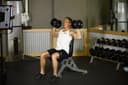
The session begins with the seated dumbbell overhead press, the foundational compound movement for shoulder mass. Sitting on a bench with back support allows you to focus entirely on pressing power without worrying about core stability. Dumbbells are preferred over a barbell here because they allow a more natural arc of motion and force each arm to work independently, promoting balanced development. Press from shoulder height to full lockout, then lower under control to ear level before pressing again.
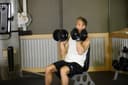
The Arnold press follows as a unique variation that rotates through the pressing motion, starting with a supinated grip at the bottom and finishing with a pronated grip at the top. This rotation engages the anterior deltoid through a greater range of motion than a standard press and also involves the lateral deltoid to a greater degree during the transition phase. Use a lighter weight than your standard overhead press and focus on the smooth rotation.
Cable lateral raises are the bread and butter of lateral deltoid development. Unlike dumbbell lateral raises where tension drops to zero at the bottom of the movement, cables provide constant tension throughout the entire range of motion. This constant tension profile is especially effective for the lateral delts, which respond well to sustained time under tension. Perform these one arm at a time, leaning slightly away from the cable to increase the range of motion.
The machine reverse fly targets the posterior deltoids, which are chronically underdeveloped in most lifters because they are not visible in the mirror and are often neglected in favor of pressing and lateral raise work. Strong rear delts are essential for shoulder health, posture, and the three-dimensional look that distinguishes a well-trained physique from one that only looks good from the front. Squeeze at peak contraction for one second on every rep.
Dumbbell lateral raises are included as a second lateral delt exercise because the lateral head is the most important for creating the wide-shoulder appearance and typically needs more volume than the other heads. Use a strict form with a slight lean forward and raise the dumbbells to just above shoulder height. Resist the temptation to use momentum. If you need to swing the weight, it is too heavy.
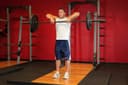
Barbell upright rows have been controversial due to concerns about shoulder impingement, but when performed with a wider grip and limited range of motion stopping just below chin height, they are a safe and effective exercise for the lateral deltoids and upper traps. A wider grip reduces internal rotation stress and shifts the emphasis from the traps to the delts.
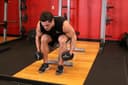
The session concludes with dumbbell shrugs to develop the upper trapezius, which creates the powerful neck-to-shoulder slope that completes the look of well-developed shoulders. Hold the peak contraction for two seconds on every rep. There is no need to roll your shoulders, simply shrug straight up and squeeze.
This workout can be performed once per week as a dedicated shoulder day or elements of it can be incorporated into your push day for additional shoulder volume. Shoulders generally tolerate higher training frequency well, so training them twice per week with moderate volume per session often produces better results than one high-volume session. Pair this workout with the PPL Push Day, which already provides significant anterior delt stimulus through pressing movements.