
MWC

PPL Pull Day (Back & Biceps)

A back and biceps focused pull day designed for balanced thickness and width development in a PPL split.

60 minintermediatehypertrophybackarmsbarbelldumbbellcablemachine
2631287

Exercises (7)

1

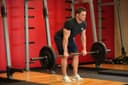
Barbell Row

Hinge at hips to about 45 degrees. Pull to lower chest, squeeze shoulder blades.

Alt: Pendlay Row, T-Bar Row

4 x 8-10

Rest 2 min

Tempo 2-1-1-0

2

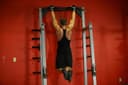
Weighted Pull-Up

Add weight via belt or dumbbell between feet. Full dead hang at bottom.

Alt: Lat Pulldown, Assisted Pull-Up Machine

4 x 6-10

Rest 2 min

Tempo 2-0-1-1

3

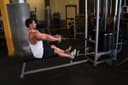
Seated Cable Row

Use V-bar attachment. Sit upright, drive elbows back, pause at contraction.

Alt: Chest-Supported Row, Machine Row

3 x 10-12

Rest 90 sec

Tempo 2-1-1-0

4

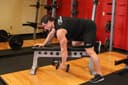
Single-Arm Dumbbell Row

Support with hand on bench. Row toward hip for lat emphasis.

Alt: Meadows Row, Landmine Row

3 x 10-12

Rest 60 sec per side

Tempo 2-1-1-0

5

Face Pull

Set cable at face height. Pull to ears with external rotation at the end.

Alt: Reverse Pec Deck, Band Pull-Apart

3 x 15-20

Rest 60 sec

Tempo 2-1-2-0

6

Barbell Curl

Keep elbows at your sides. Avoid swinging the weight.

Alt: EZ-Bar Curl, Dumbbell Curl

3 x 10-12

Rest 60 sec

Tempo 2-0-1-1

7

Incline Dumbbell Curl

Set bench to 45 degrees. Let arms hang straight down and curl with a slow eccentric.

Alt: Preacher Curl, Spider Curl

3 x 10-12

Rest 60 sec

Tempo 3-0-1-0

Advertisement

About This Workout

The PPL Pull Day is designed to build a complete back from top to bottom while giving your biceps the dedicated volume they need to grow. Within the Push/Pull/Legs framework, this session is responsible for all horizontal and vertical pulling movements, training the lats, rhomboids, traps, rear delts, and biceps in a single focused workout.

The workout begins with barbell rows, one of the most effective mass-building exercises for the entire posterior chain. Barbell rows allow you to load heavy and they recruit a wide range of back muscles simultaneously including the lats, rhomboids, lower traps, and even the spinal erectors as stabilizers. The key to maximizing this lift is maintaining a rigid torso angle and driving the elbows behind the body rather than simply curling the weight upward.

Following barbell rows, you move into weighted pull-ups or lat pulldowns. This vertical pulling pattern is essential for developing lat width, which creates the V-taper silhouette. If you can perform pull-ups with additional weight for the prescribed rep range, choose that option. If not, lat pulldowns are an excellent substitute that allows precise load management. Focus on initiating the pull by depressing the shoulder blades and driving the elbows toward the hips.

The seated cable row comes next, offering a slightly different angle and a constant tension profile throughout the entire range of motion. Use a close-grip or V-bar attachment to emphasize the mid-back and rhomboids, or switch to a wide grip to increase lat involvement. Pause briefly at full contraction on each rep to reinforce the mind-muscle connection.

Single-arm dumbbell rows round out the back work. Unilateral training addresses asymmetries and allows you to focus on one side at a time, which often results in a better contraction. Use a bench for support and row the dumbbell toward your hip rather than your armpit to maximize lat engagement.

Face pulls are included as both a rear delt exercise and a shoulder health movement. The rear delts are often underdeveloped relative to the front and side delts, which can lead to postural imbalances and shoulder issues. Performing face pulls with an external rotation component at the top helps strengthen the rotator cuff and counteracts the internal rotation bias created by heavy pressing.

The session finishes with two biceps exercises. Barbell curls are the primary mass builder for the biceps, allowing you to overload the muscle with relatively heavy weight. Incline dumbbell curls follow as a stretch-focused exercise. When you curl from an inclined position, the long head of the biceps is placed under a deep stretch at the bottom of the movement, and recent research has shown that training a muscle in its lengthened position can produce superior hypertrophy.

Volume is balanced to allow this session to be performed twice per week in a six-day PPL rotation. If you run the program three days per week, consider adding one extra set to the barbell row and pull-up exercises. Progression should be slow and deliberate, as back exercises are prone to form breakdown when ego lifting takes over. Focus on squeezing each rep rather than chasing numbers.

This workout pairs seamlessly with the PPL Push Day and PPL Leg Day in this collection to form a complete hypertrophy-focused training week.

Pro Tips

  • 01.Initiate every pulling movement by retracting your shoulder blades before bending your arms.
  • 02.Use lifting straps on heavy rows and pull-ups if grip is limiting your back training.
  • 03.Vary your grip width across training cycles to hit different areas of the back.
  • 04.Keep your ego in check on rows. A controlled rep with moderate weight builds more muscle than a heaving cheat rep with heavy weight.
  • 05.Supinate your wrist at the top of dumbbell curls for a stronger bicep peak contraction.
Advertisement

Frequently Asked Questions

Should I use lifting straps for back exercises?
Straps are a valuable tool when your grip becomes the limiting factor on back exercises. Your lats and rhomboids can handle far more load than your forearms, so allowing grip fatigue to cut your sets short means leaving back growth on the table. Use straps on your heaviest rows and pull-ups, but perform at least some warm-up sets and lighter exercises without them to continue developing grip strength over time.
How do I know if I am using my back muscles and not just my arms?
The most effective cue is to think about driving your elbows behind your body rather than pulling the weight with your hands. Your hands are simply hooks. Before each rep, initiate the movement by depressing and retracting your scapulae. If you feel the contraction primarily in the middle of your back between your shoulder blades, you are on the right track. Filming yourself from the side can also help you assess whether your torso angle stays consistent or if you are using momentum.
Can I replace pull-ups with lat pulldowns?
Yes, lat pulldowns are a perfectly valid substitute. They work the same muscle groups through a similar movement pattern with the advantage of precise load selection. Pull-ups are generally considered superior because they require more stabilizer engagement and core activation, but the difference in hypertrophy outcomes is likely minimal if you train pulldowns with the same intensity and progressive overload. Use whichever version lets you train closest to failure with the best form.
Why are face pulls included on a pull day?
Face pulls target the rear deltoids, middle traps, and external rotators of the shoulder. These muscles are critical for shoulder health and posture but are often neglected. Including them on pull day makes logistical sense because the movement pattern is a pull and the equipment is the same cable station you are already using. Performing face pulls consistently helps balance out the heavy pressing volume from push day and reduces the risk of shoulder impingement over time.
How should I progress the weight on barbell rows?
Aim to add 2.5 kg to the bar every one to two weeks as long as you can maintain proper form through all prescribed reps and sets. Once you stall, hold the weight constant for two to three weeks and try to add one rep per set. When you can complete the top of the rep range for all sets, increase the weight again. This double progression method ensures you are always making progress without sacrificing technique, which is especially important on rows where form breakdown can lead to lower back injuries.

Related Workouts