About This Workout
Building a well-developed chest at home comes down to two things: pushing your available pushup variations close to failure, and adding dumbbells for extra loading once bodyweight alone stops being challenging. This workout combines both approaches into a single 30-minute session that trains the chest from multiple angles without needing any gym equipment.
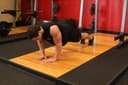
Pushups remain one of the most effective chest exercises available, home or gym. Changing hand position and body angle shifts emphasis across the chest, upper chest, and triceps, giving you meaningful exercise variety even with just your bodyweight. This workout uses three pushup variations across the session, each targeting the chest slightly differently, which also helps prevent the plateau that comes from doing the exact same movement repeatedly.
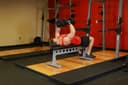
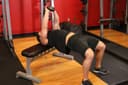
If you have a pair of dumbbells, even light ones, this workout adds dumbbell floor press and dumbbell flyes to the mix. Both movements can be performed lying on the floor rather than a bench, and both provide a different stimulus than pushing your own bodyweight — particularly the flye, which trains the chest through a stretch-focused range of motion that pushups cannot replicate as effectively.
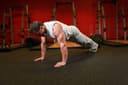
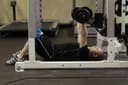
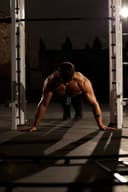
The session opens with standard pushups while you are freshest, since they allow the highest rep quality and serve as the benchmark movement you will progress over time. The dumbbell floor press follows as the primary loaded pressing movement — lying on the floor rather than a bench slightly shortens the range of motion at the bottom, but it also makes the movement safer to push hard without a spotter, since the floor catches your upper arms at the bottom of every rep. Wide pushups shift more work to the outer chest by reducing the triceps' contribution, dumbbell flyes load the chest through its stretched position, and close-grip pushups finish the session by emptying whatever the chest and triceps have left.
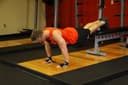
Feet-elevated pushups are included as a decline variation that shifts emphasis toward the upper chest — the region of the pecs that attaches to the collarbone and that flat pressing alone tends to underserve. Elevating your feet on a step, chair, or couch increases both the loading on your upper body and the angle of the press, making this the closest bodyweight equivalent to an incline bench press. If you cannot yet complete solid feet-elevated reps, do them flat and elevate your feet only on the first set.
Rest periods in this workout are kept moderate at 60-90 seconds, since bodyweight and light dumbbell chest work generally allows faster recovery between sets than heavy barbell pressing. Focus on getting close to failure on every set rather than stopping arbitrarily at a fixed rep count — the last few reps of each set, where the movement genuinely gets hard, are what drive most of the growth stimulus. Research comparing rep-matched training conditions consistently finds that sets taken near failure produce comparable growth across a wide range of loads, which is exactly why bodyweight training works: the tool matters less than the effort.
Progression at home follows a simple hierarchy. First, add reps to each pushup variation week over week. Once you comfortably exceed about 20 reps per set, make the movement harder rather than endlessly adding reps: slow the lowering phase to three or four seconds, add a pause at the bottom, elevate your feet, or move part of your bodyweight onto one arm with archer pushups. On the dumbbell movements, add weight when your dumbbells allow it, or add reps and slow the tempo when they do not.
One honest limitation worth naming: without heavier dumbbells, this workout will eventually stop being your ceiling for chest strength — an advanced lifter pressing heavy loads in a gym has access to a stimulus that bodyweight and light dumbbells cannot fully replicate. But that ceiling is much higher than most people assume, and for beginner and intermediate lifters, consistent effort on this session will produce visible chest development for months before equipment becomes the limiting factor.
This workout fits easily twice per week as part of a broader home training routine, or once per week if you are training your full body across multiple sessions. Pair it with a back-focused session like our Dumbbell Back Workout to keep your pushing and pulling volume balanced — chest-dominant training without matching pull volume is a common home-training mistake that leads to rounded shoulders and eventual shoulder discomfort.