MWC

PPL Leg Day (Quads, Hamstrings & Glutes)

A complete lower body session targeting quads, hamstrings, and glutes with compound and isolation movements for maximum growth.

70 minintermediatehypertrophylegsglutesbarbelldumbbellmachinecable
2203256

Exercises (7)

1

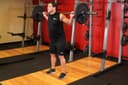
Barbell Back Squat

Hit at least parallel. Brace your core hard before each rep.

Alt: Front Squat, Safety Bar Squat

4 x 6-8

Rest 3 min

Tempo 3-0-1-0

2

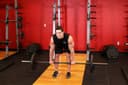
Romanian Deadlift

Push hips back, keep bar close to legs, feel hamstring stretch at bottom.

Alt: Stiff-Leg Deadlift, Single-Leg RDL

4 x 8-10

Rest 2 min

Tempo 3-1-1-0

3

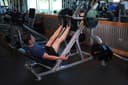
Leg Press

Feet low and shoulder-width for quad focus. Do not lock knees at top.

Alt: Hack Squat, Belt Squat

3 x 10-12

Rest 2 min

Tempo 2-0-1-0

4

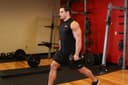
Walking Dumbbell Lunge

Long strides, keep torso upright. Drive through the front heel.

Alt: Bulgarian Split Squat, Reverse Lunge

3 x 12 per leg

Rest 90 sec

Tempo 2-0-1-0

5

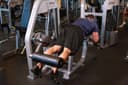
Lying Leg Curl

Full range of motion. Squeeze hamstrings hard at peak contraction.

Alt: Seated Leg Curl, Nordic Hamstring Curl

3 x 10-12

Rest 60 sec

Tempo 2-1-1-0

6

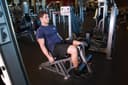
Leg Extension

Controlled tempo, pause at the top. Avoid slamming the weight.

Alt: Sissy Squat, Wall Sit

3 x 12-15

Rest 60 sec

Tempo 2-1-2-0

7

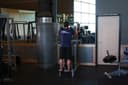
Standing Calf Raise

Full stretch at bottom, hold peak contraction for 2 seconds at top.

Alt: Seated Calf Raise, Leg Press Calf Raise

4 x 12-15

Rest 60 sec

Tempo 2-2-1-0

Advertisement

About This Workout

The PPL Leg Day is the third pillar of the Push/Pull/Legs split and arguably the most demanding session of the entire rotation. This workout covers every major muscle in the lower body including the quadriceps, hamstrings, glutes, and calves through a carefully sequenced combination of heavy compound lifts and targeted isolation exercises.

The session begins with the barbell back squat, widely considered the single most effective exercise for overall lower body development. Squats recruit the quadriceps, glutes, adductors, and spinal erectors simultaneously, making them an unparalleled mass builder. The prescribed rep range of six to eight keeps the intensity high enough to drive strength gains while still accumulating meaningful hypertrophy volume. Focus on hitting at least parallel depth on every rep to maximize glute and quad recruitment.

After squats, the workout moves to the Romanian deadlift, which shifts the emphasis to the posterior chain. RDLs train the hamstrings and glutes through their lengthened range, which research has identified as a powerful stimulus for muscle growth. The key technique cue is to push your hips back while maintaining a slight knee bend and a neutral spine. You should feel an intense stretch in the hamstrings at the bottom of each rep before driving your hips forward to lockout.

The leg press follows as a quad-dominant compound that allows you to load heavily without the spinal compression of squats. With your lower back supported by the machine, you can focus entirely on driving through your quads. Place your feet in the lower half of the platform and use a moderate stance width to emphasize the quads. Higher foot placement shifts more work to the glutes and hamstrings.

Walking lunges add a unilateral component to the workout, addressing any left-to-right strength imbalances and challenging your balance and coordination. The dynamic stepping motion also engages the stabilizers around the hip and knee more than bilateral exercises. Take long strides and keep your torso upright throughout the movement.

Leg curls isolate the hamstrings through knee flexion, which is a different function than the hip extension trained by Romanian deadlifts. Training both functions ensures complete hamstring development. Use a lying or seated leg curl machine and focus on a full range of motion with a brief pause at peak contraction.

The leg extension targets the quadriceps in isolation, providing a final opportunity to flood the quads with blood and accumulate additional metabolic stress. Research by Maeo and colleagues has shown that leg extensions produce comparable quad growth to squats when total volume is equalized, so this exercise is far from a throwaway movement. Use a controlled tempo and avoid locking out aggressively to keep tension on the muscle.

Standing calf raises round out the session. Calves are notoriously stubborn muscles, and most people do not train them with sufficient volume or intensity. Perform each rep with a full stretch at the bottom and a hard squeeze at the top, holding the peak contraction for one to two seconds.

This workout is designed to be performed one to two times per week. The total volume is moderate enough to recover from within a six-day PPL rotation but substantial enough to drive growth when combined with adequate nutrition and sleep. If you are running a three-day rotation, consider adding one to two extra sets on squats and Romanian deadlifts.

Leg training is physically and mentally demanding, but it is also the fastest path to a balanced, proportional physique. Pair this session with the PPL Push Day and PPL Pull Day for a complete training week.

Pro Tips

  • 01.Warm up thoroughly with 5 minutes of light cardio and dynamic leg stretches before squatting.
  • 02.Use a belt on your heaviest squat sets to increase intra-abdominal pressure and protect your spine.
  • 03.On Romanian deadlifts, stop lowering the bar when you feel your hamstrings are fully stretched rather than trying to touch the floor.
  • 04.Place your feet lower on the leg press platform to emphasize quads or higher to target glutes and hamstrings.
  • 05.Train calves with a slow tempo and full range of motion. Most people bounce through calf raises too quickly to stimulate growth.
Advertisement

Frequently Asked Questions

Can I replace back squats with front squats or a machine squat?
Front squats are an excellent alternative that place more emphasis on the quads and require less lower back involvement. Machine squats such as the hack squat or Smith machine squat are also valid, especially if you have back issues. The key factor for hypertrophy is not the specific squat variation but rather that you train the movement through a full range of motion with progressive overload. Choose the variation that lets you train hard and safely.
How deep should I squat for maximum muscle growth?
Research consistently shows that squatting to at least parallel, where the hip crease drops to knee level, maximizes quadricep and glute activation. Going deeper may provide a small additional benefit for glute development but can also increase stress on the knees and lower back. If your mobility allows it, squatting slightly below parallel is ideal. However, half squats with heavier weight are not a substitute for full-depth squats with moderate weight when hypertrophy is the goal.
Should I do leg extensions if I have bad knees?
Leg extensions have a reputation for being hard on the knees, but recent research suggests they are safe for most people when performed with controlled form and an appropriate load. If you experience sharp knee pain during leg extensions, stop immediately and consult a physiotherapist. You can substitute them with wall sits, Spanish squats using a band, or short-arc quad extensions with reduced range of motion. The key is finding a pain-free variation that trains the quadriceps.
Why is the workout 70 minutes? That seems long for legs.
Lower body muscles are the largest muscle groups in the body and the compound movements that train them, like squats and Romanian deadlifts, generate significant systemic fatigue. This means you need longer rest periods between sets to maintain performance, typically two to three minutes for heavy compounds. When you factor in warm-up sets, working sets, and rest periods across seven exercises, 70 minutes is a realistic timeframe. Rushing through leg day by shortening rest periods will compromise your strength output and ultimately your results.
How important are calves? Can I skip them?
You can skip calves, but you should know that calf development is largely determined by training consistency rather than genetics alone. Most people who complain about stubborn calves simply do not train them with the same focus and intensity they give to other muscles. If calf development matters to you aesthetically, perform the prescribed calf raises with a full stretch and hard contraction on every rep. If you truly do not care about calf size, you can drop the exercise and reallocate that time to an additional quad or hamstring set.

Related Workouts