
About This Workout
Training the back effectively with only dumbbells is entirely possible once you understand which movements to prioritize. This workout centers on the one-arm dumbbell row, the single most effective back exercise you can perform without a barbell or cable machine, and supports it with dumbbell pullovers and rear delt work to build a complete, well-rounded back.
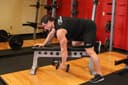
The one-arm dumbbell row is the foundation of this workout for good reason. Bracing on a bench with one hand lets you eliminate momentum and lower back involvement almost entirely, isolating the lats and mid-back far more directly than a bilateral row typically allows. It also lets you use significant weight per side, since you are not limited by your weaker arm the way you would be with a barbell row.
The dumbbell pullover fills a gap that pure rowing exercises leave open — it stretches and loads the lats through a different plane of motion, reaching overhead rather than pulling toward the torso. Many lifters find this movement produces a noticeably different sensation in the lats than any rowing variation, making it a valuable complement rather than a redundant addition.
A quick anatomy note explains the exercise selection. The back is not one muscle but several working together: the latissimus dorsi, the large sheets running down each side that pull your arms toward your torso and create width; the mid-back muscles — rhomboids, mid and lower trapezius — that retract and control the shoulder blades and create thickness; the rear deltoids at the back of the shoulder; and the upper traps that elevate the shoulders. Rows with the elbow close to the body bias the lats, rows and raises with the elbow flared bias the mid-back and rear delts, and shrugs handle the upper traps. This workout deliberately includes each of these categories rather than repeating five variations of the same lat-focused row.
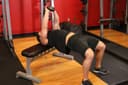
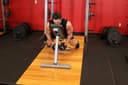
The incline row, performed with your chest supported on an incline bench, is the strictest rowing variation here. Because your torso is fully supported, there is no way to cheat the weight up with momentum or lower-back drive, which makes it an excellent second rowing movement after the heavier one-arm rows. Pull your elbows back and up, squeeze the shoulder blades together at the top, and lower under control.
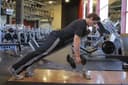
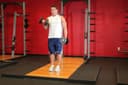
Rear delt and upper back work rounds out the session, since a complete back workout should also address posture-supporting muscles that pure lat-focused training can neglect. The lying rear lateral raise and dumbbell shrug target this area, which matters both for aesthetics and for shoulder health, since underdeveloped rear delts relative to front delts is a common contributor to shoulder discomfort in lifters who press frequently. If your training week includes multiple pressing sessions, treat this rear-delt work as non-negotiable rather than optional accessory volume.
Progression on dumbbell back work follows a double-progression scheme: work within the prescribed rep range, and when you can complete all sets at the top of the range with strict form, move up to the next dumbbell weight and drop back to the bottom of the range. Because dumbbells usually jump in 5-pound increments, some exercises will need an extra week or two of rep progress before the next jump feels manageable — that is normal and does not mean you have stalled.
Two form cues matter more than any others in this session. First, pull with your elbows, not your hands: thinking about driving the elbow back and toward your hip keeps the lats doing the work instead of the biceps. Second, control the lowering phase on every rep — letting the dumbbell drop back down wastes the half of each rep where the back muscles are working hardest under stretch, and on rows it invites the momentum that turns a back exercise into a lower-back exercise.
This workout works well as a standalone session once or twice weekly, or as the pulling half of a home push/pull split alongside our Chest Workout at Home. Rest periods are set at 90 seconds for the primary rowing movements to allow enough recovery for genuinely heavy loading, with slightly shorter rest on the accessory work. Expect the full session to take about 40 minutes at a steady pace.