About This Workout
This session is a focused, standalone glute workout for anyone who wants a single, complete glute-training day rather than a full multi-week program. It is built around the same principle that drives our full Glute Building Program: the barbell hip thrust as the primary movement, supported by unilateral and isolation exercises that train the glutes from every angle. The result is a session that covers all three functions the glutes perform — hip extension, hip abduction, and single-leg stabilization — rather than relying on squats alone and hoping the glutes grow as a side effect.
Understanding basic glute anatomy explains why the workout is structured this way. The gluteus maximus, the largest muscle in the body, is primarily a hip extensor: it drives the thigh backward relative to the torso, which is exactly what happens at the top of a hip thrust, deadlift, or step-up. The gluteus medius and minimus sit higher and to the side of the hip and handle abduction, moving the leg away from the midline, along with stabilizing the pelvis whenever you stand on one leg. A complete glute session trains all of these functions, which is why this workout combines heavy hip extension, single-leg work, and dedicated abduction and kickback movements rather than repeating the same pattern five times.
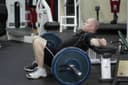
The barbell hip thrust opens the session while your energy is highest, since it is both the most technically demanding and highest-payoff exercise here. Loading the hips directly through a full range of hip extension produces glute activation that squats and deadlifts, which involve more of the surrounding musculature, generally cannot match on a rep-for-rep basis. Set up with your shoulder blades on a bench, the bar padded across your hips, and your feet positioned so your shins are vertical at the top of the rep. Drive through your heels, reach full hip extension, and squeeze hard for a full second before lowering under control.
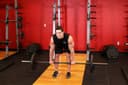
The Romanian deadlift follows as the second compound movement, training the glutes and hamstrings in their lengthened position — the opposite end of the range from the hip thrust, which is hardest at full contraction. Training a muscle at long muscle lengths has been repeatedly shown to be a potent driver of hypertrophy, so pairing a stretch-focused hinge with a contraction-focused thrust covers the growth stimulus from both directions within a single session.
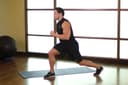
From there the workout moves into unilateral work with split squats and step-ups, which train each leg independently. Single-leg training addresses strength asymmetries that bilateral exercises can mask, and it consistently produces strong glute activation because the gluteus medius must work continuously to keep the pelvis level while you balance on one leg. The knee raise at the top of each step-up adds a moment of full single-leg stabilization that makes the movement meaningfully harder than a plain step-up.
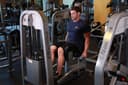
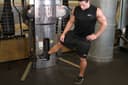
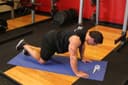
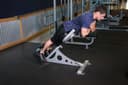
The session finishes with isolation work — machine abduction, cable kickbacks, and back extensions — which lets you take the glutes to genuine failure without your lower back, hamstrings, or grip becoming the limiting factor first, something that is much harder to achieve on compound movements alone. Because fatigue in supporting muscles is no longer a constraint by this point, push these final sets to within a rep or two of true failure.
Rest periods follow the demands of each exercise: two to three minutes on the hip thrust to support heavy loading, around two minutes on the Romanian deadlift, and 60 to 90 seconds on the unilateral and isolation work where the systemic fatigue per set is lower. Cutting rest short on the heavy lifts costs you weight on the bar, which costs you growth stimulus, so resist the urge to rush the first half of the session.
Use this workout once or twice weekly as a standalone glute-focused session within a broader training split, or as a template for the lower-body days of your own program. Progress it the same way you would any hypertrophy session: add weight or reps to the hip thrust and Romanian deadlift nearly every week, and log your working weights so you always know exactly what to beat. If you want this structure expanded into a complete multi-week plan with upper-body days included, our Glute Building Program is built around exactly this session's template.