Box Jump (Multiple Response)
How to do the Box Jump (Multiple Response)
- 1
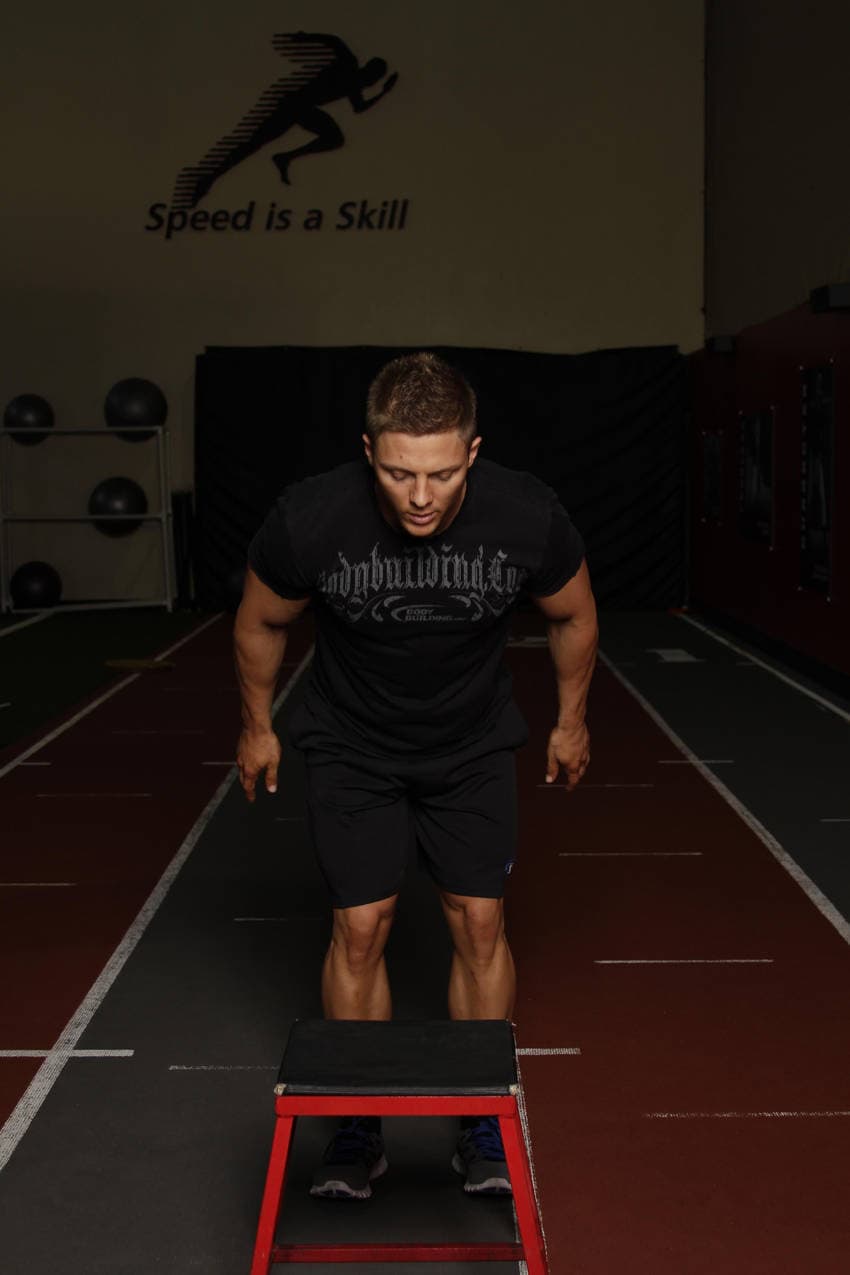
Assume a relaxed stance facing the box or platform approximately an arm's length away. Arms should be down at the sides and legs slightly bent.
- 2
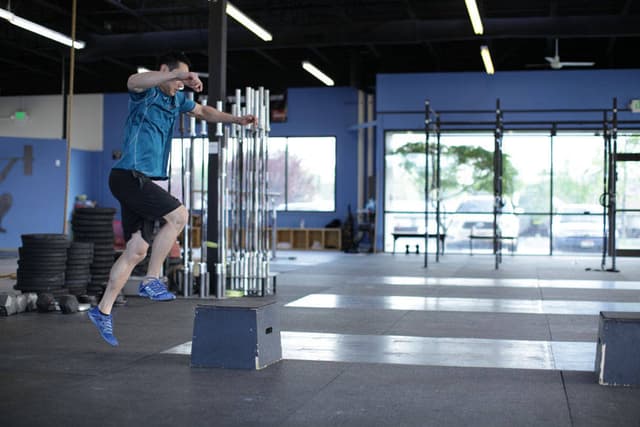
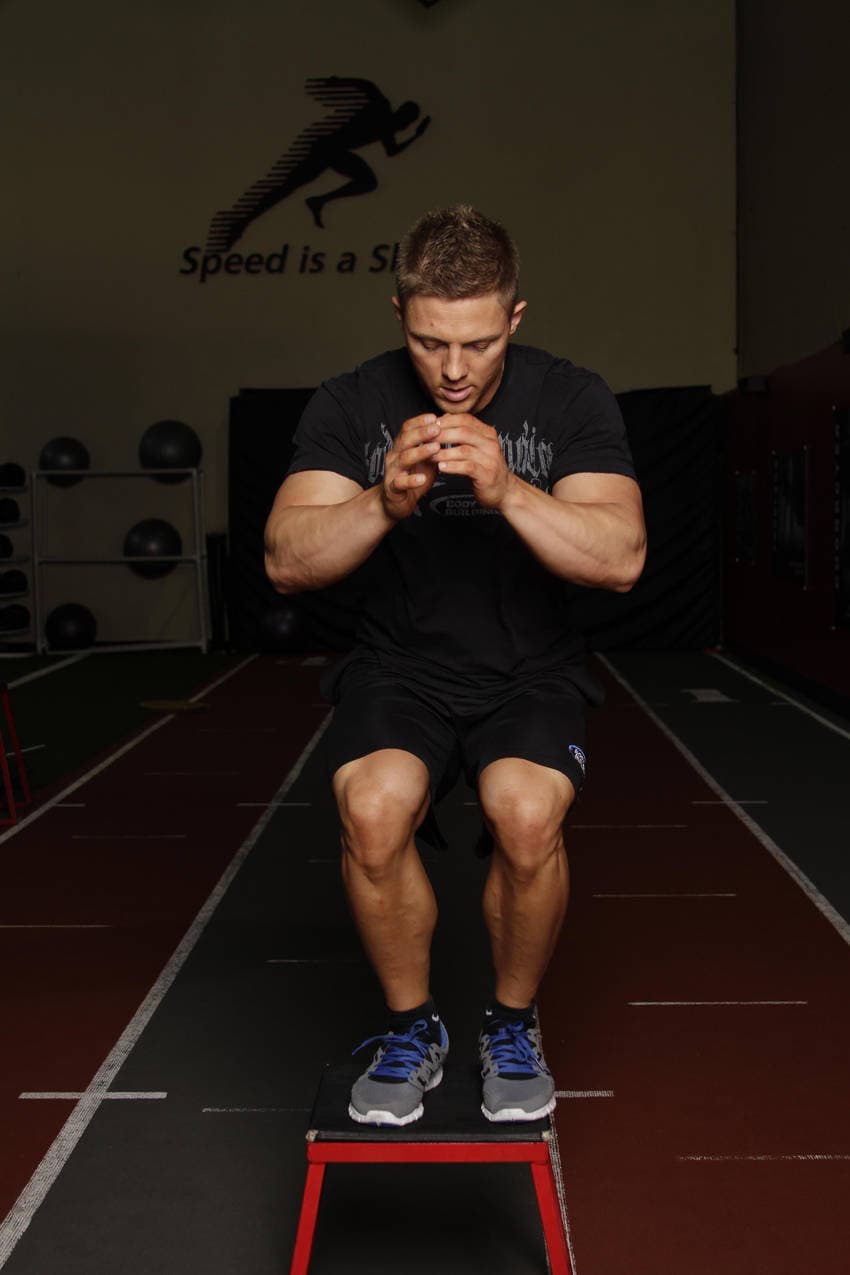
Using the arms to aid in the initial burst, jump upward and forward, landing with feet simultaneously on top of the box or platform.
- 3
Immediately drop or jump back down to the original starting place; then repeat the sequence.
How to program the Box Jump (Multiple Response)
Sets and reps
As a compound movement, the Box Jump (Multiple Response) responds well to heavier loading. For strength, work in the 3–5 sets of 4–8 reps range with 2–3 minutes of rest between sets. For muscle growth, 3–4 sets of 8–12 reps with 90 seconds of rest is the classic hypertrophy zone. Place it early in your session, when you're freshest, and leave 1–3 reps in reserve on most sets.
Progression
The Box Jump (Multiple Response) is beginner-friendly. Start with a load (or rep count) you can complete with clean form on every set, then add a small amount of weight or 1–2 reps each week. When you hit the top of your rep range on all sets, increase the load and drop back to the bottom of the range — simple double progression.
Secondary muscles worked
Put the Box Jump (Multiple Response) into a plan
Generate a free, personalized workout plan that programs this and hundreds of other exercises around your goals.
Working up to heavy sets? Use the one-rep max calculator to set percentages and the plate calculator to load the bar.
Frequently asked questions
What muscles does the Box Jump (Multiple Response) work?
The Box Jump (Multiple Response) primarily targets the Hamstrings. It also recruits the Abductors, Adductors, Calves, Glutes, Quadriceps as supporting muscles.
What equipment do I need for the Box Jump (Multiple Response)?
You need Other. Difficulty level: Beginner.
How many sets and reps of the Box Jump (Multiple Response) should I do?
For strength, do 3–5 sets of 4–8 reps with 2–3 minutes rest. For muscle growth, do 3–4 sets of 8–12 reps with about 90 seconds rest.