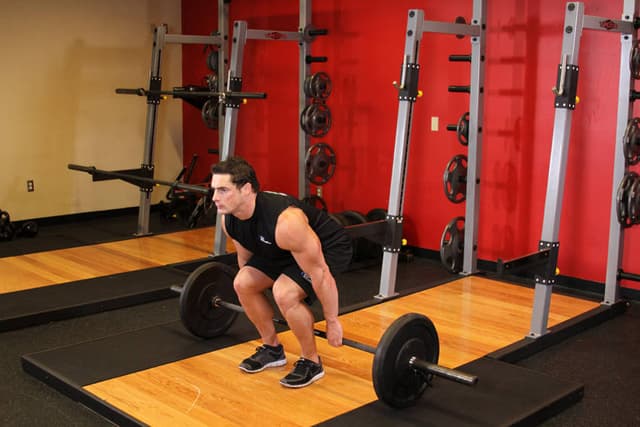
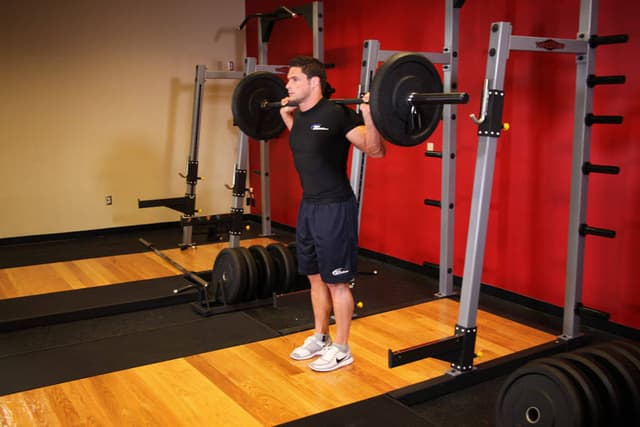
Olympic Squat
How to do the Olympic Squat
- 1
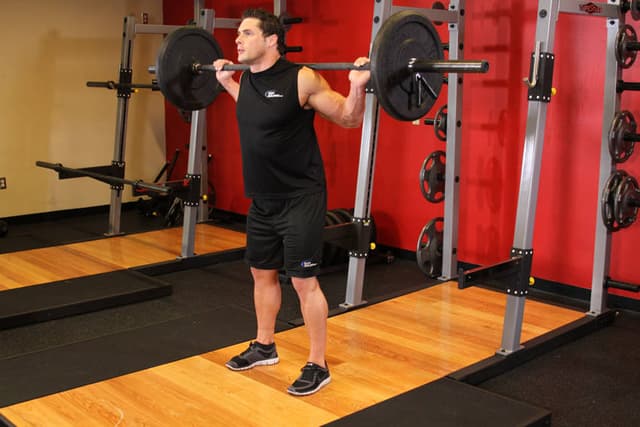
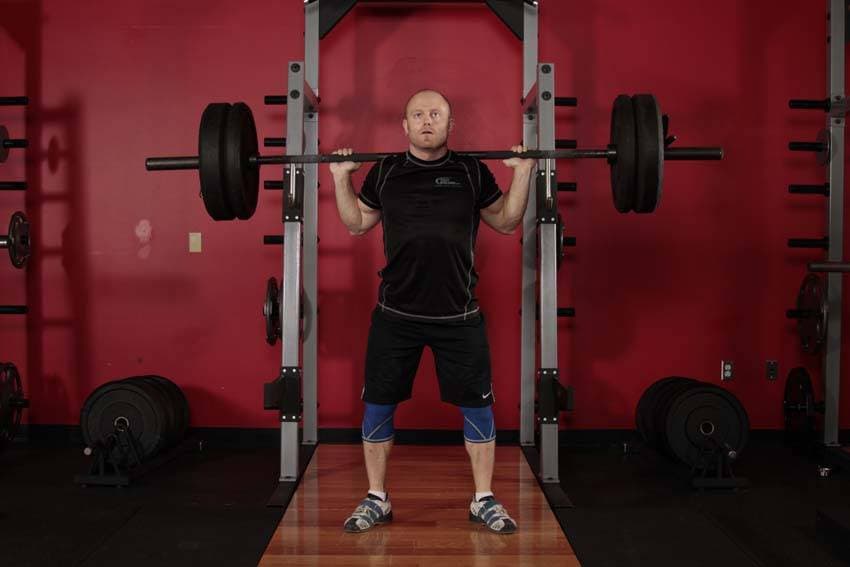
Begin with a barbell supported on top of the traps. The chest should be up, and the head facing forward. Adopt a hip width stance with the feet turned out as needed.
- 2
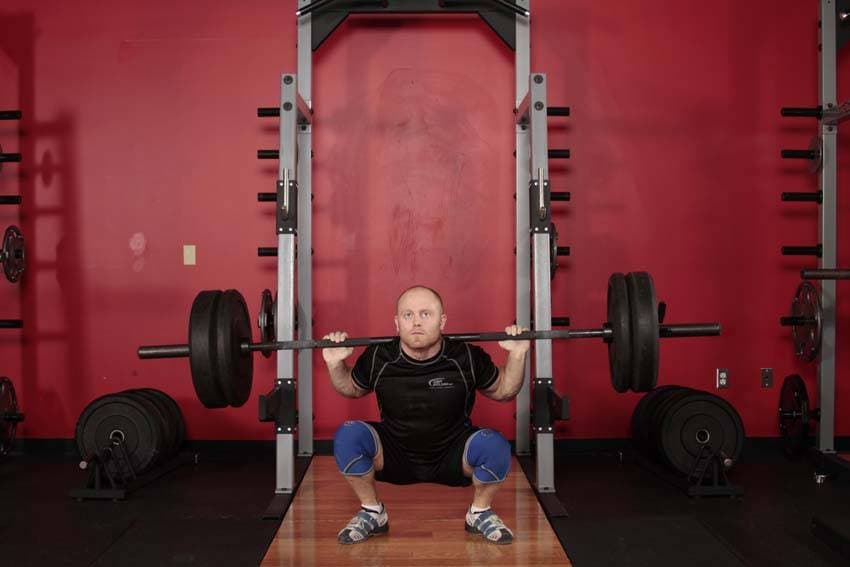
Descend by flexing the knees, refraining from moving the hips back as much as possible. This requires that the knees travel forward; ensure that they stay aligned with the feet. The goal is to keep the torso as upright as possible. Continue all the way down, keeping the weight on the front of the heel.
- 3
At the moment the upper legs contact the lower, reverse the motion, driving the weight upward.
How to program the Olympic Squat
Sets and reps
As a compound movement, the Olympic Squat responds well to heavier loading. For strength, work in the 3–5 sets of 4–8 reps range with 2–3 minutes of rest between sets. For muscle growth, 3–4 sets of 8–12 reps with 90 seconds of rest is the classic hypertrophy zone. Place it early in your session, when you're freshest, and leave 1–3 reps in reserve on most sets.
Progression
The Olympic Squat is rated intermediate. Earn the right to progress: only add load when every rep of every set moves with consistent technique. Video your sets or use a mirror to check positions, and use double progression (add reps to the top of your range, then add load and reset) rather than jumping weight.
Secondary muscles worked
Put the Olympic Squat into a plan
Generate a free, personalized workout plan that programs this and hundreds of other exercises around your goals.
Working up to heavy sets? Use the one-rep max calculator to set percentages and the plate calculator to load the bar.
Frequently asked questions
What muscles does the Olympic Squat work?
The Olympic Squat primarily targets the Quadriceps. It also recruits the Calves, Glutes, Hamstrings as supporting muscles.
What equipment do I need for the Olympic Squat?
You need Barbell. Difficulty level: Intermediate.
How many sets and reps of the Olympic Squat should I do?
For strength, do 3–5 sets of 4–8 reps with 2–3 minutes rest. For muscle growth, do 3–4 sets of 8–12 reps with about 90 seconds rest.